Showing posts with label Google. Show all posts

Monday, September 23, 2013

USGOVT spying on citizens is now ubiquitous

The seal of the U.S. National Security Agency....
The Government Is Spying On Us Through Our Computers, Phones, Cars, Buses, Streetlights, At Airports And On The Street, Via Mobile Scanners And Drones, Through Our Smart Meters, And In Many Other Ways

Even now – after all of the revelations by Edward Snowden and other whistleblowers – spying apologists say that the reports are “exaggerated” or “overblown”, and that the government only spies on potential bad guys.

In reality, the government is spying on everyone’s digital and old-fashioned communications. For example, the government is photographing the outside information on every piece of snail mail. The government is spying on you through your phone … and may even remotely turn on your camera and microphone when your phone is off.

As one example, the NSA has inserted its code into Android’s operating system … bugging three-quarters of the world’s smartphones. Google – or the NSA – can remotely turn on your phone’s camera and recorder at any time.

Moreover, Google knows just about every WiFi password in the world … and so the NSA does as well, since it spies so widely on Google.

But it’s not just the Android.  In reality, the NSA can spy on just about everyone’s smart phone.

Cell towers track where your phone is at any moment, and the major cell carriers, including Verizon and AT&T, responded to at least 1.3 million law enforcement requests for cell phone locations and other data in 2011. (And – given that your smartphone routinely sends your location information back to Apple or Google – it would be child’s play for the government to track your location that way.) Your iPhone, or other brand of smartphone is spying on virtually everything you do (ProPublica notes: “That’s No Phone. That’s My Tracker“). Remember, that might be happening even when your phone is turned off. Read more >>
Enhanced by Zemanta

Thursday, September 19, 2013

Google expert claims We'll be uploading our entire MINDS to computers by 2045

A chimpanzee brain at the Science Museum London
In just over 30 years, humans will be able to upload their entire minds to computers and become digitally immortal - an event called singularity - according to a futurist from Google.

Ray Kurzweil, director of engineering at Google, also claims that the biological parts of our body will be replaced with mechanical parts and this could happen as early as 2100.

Kurweil made the claims during his conference speech at the Global Futures 2045 International Congress in New York at the weekend.

The conference was created by Russian multimillionaire Dmitry Itskov and featured visonary talks about how the world will look by 2045.

Kurzweil said: 'Based on conservative estimates of the amount of computation you need to functionally simulate a human brain, we'll be able to expand the scope of our intelligence a billion-fold.'

He referred to Moore's Law that states the power of computing doubles, on average, every two years quoting the developments from genetic sequencing and 3D printing. In Kurweil's book, The Singularity Is Near, he plots this development and journey towards singularity in a graph. Read more >>
Enhanced by Zemanta

Wednesday, August 28, 2013

Doc uses Google Glass to live-stream surgery

Arthroscopic reconstruction of the anterior cr...
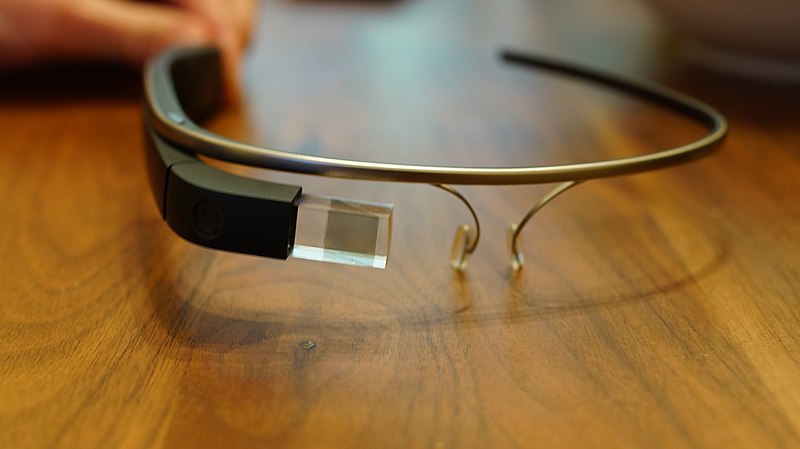
Google Glass is finding its way into operation rooms: A surgeon in Ohio recently became one of the first to livestream an operation and use the technology to consult with a colleague.

On Aug. 21, Dr. Christopher Kaeding, director of sports medicine at Ohio State University Wexner Medical Center, wore Google Glass a wearable computer that has a frame similar to traditional eyeglasses as he performed surgery on the anterior cruciate ligament (ACL) in the knee of a 47-year-old woman.

The procedure was livestreamed to a group of medical students, who watched on laptops, and to Dr. Robert Magnussen, an assistant professor of clinical orthopedics at Ohio State, who watched from his office.

During the operation, Kaeding consulted with Magnussen about what he was seeing during the surgery.

Kaeding said he did not find wearing the device to be a distraction. "To be honest, once we got into the surgery, I often forgot the device was there. It just seemed very intuitive and fit seamlessly," Kaeding said in a statement. Read more >>
Enhanced by Zemanta

Monday, August 26, 2013

Google Glass app being designed to read emotions

English: Managing emotions - Identifying feelings
Last week, I stood in the cramped office of a Sand Hill Road venture capital firm, staring through Google Glass eyewear at an 18-year-old with a blank expression.

In the display above my right eye, the word "neutral" appeared. Then he cracked a wide smile and the word changed to "happy."

The young man with plenty of reasons to grin is Catalin Voss, an entrepreneur and Stanford student from Germany who has been working on iPhone apps since he was 12 - that is to say, pretty much since there has been an iPhone.

Now, with a small team of mostly fellow students, he's working on emotion-recognition tools that could improve education and training by monitoring engagement. But there are other interesting use cases as well: Voss, who has a cousin with autism, thinks the Glass app could help those with difficulty discerning emotions to interact in more natural ways, easing their path through the world.

The company, Sension, based in the Menlo Park offices of Highland Capital for the summer, is among a handful of businesses making strides in emotion-recognition technology. The tools can analyze facial expressions and vocal patterns for signs of specific emotions: Happiness, sadness, anger, frustration and more.

There's a broad array of potential applications, including potentially creepy commercial ones: If my TV knows I'm feeling depressed, might it load up an ad for fast food? Read more >>
Enhanced by Zemanta

Tuesday, August 20, 2013

Robocop a step closer- Google Glass App for police

Google Glass has lots of potential applications beyond just making it easier for people to check out their Twitter feed without taking their phones out of their pockets. Mutualink is demoing one such app today at APCO, a conference for public safety communications, with its Glass App for police, firefighters and first responders.

The app would allow public safety officers and officials to communicate in real-time via streaming video from the scene, as well as to receive and view key documents, including things like building schematics, medical records of victims, live feeds of security cameras in the area and more. It’s the ultimate on-demand intel platform for agents working in the field, and a way to stay in contact with HQ and other organizations even when radio systems won’t talk to each other.

Of course, there could be privacy concerns with such an app. Recently, news came out that NYC Mayor Michael Bloomberg and other officials in the U.S. oppose the idea of police body cameras, suggesting they’d be open to all kinds of dangerous interpretation. Mutualink says its solution emphasizes agency control of media and recording on glass, so privacy would be in the hands of the cops and other officials using them and should be protected.

A tactical heads-up display being used by safety officers is a natural fit for Glass, and as the enforcement agents would be using the head-mounted computer as part of their uniform, they wouldn’t have to worry about looking like idiots, so this could be a place where Google actually finds some long-term adoption. Mutualink is also already a service provider used by NATO Special Operations Forces, homeland security, police and fire departments, so it has the relationships in place to make this happen. Read more >>
Enhanced by Zemanta

Thursday, August 8, 2013

Google Glass Ban List Grows

Don’t be surprised if the number of locations continue to increase, but for now, here are the top 10 places that have banned Google Glass.

10. Banks/ATMs

In this crazy age of identity theft it’s not exactly far-fetched for banks to be wary of Google Glass. It seems completely plausible for a wearer to sneak in behind a customer and snap a quick picture of their personal information, such as their ID or bank account info.

9. Sports Arenas/Concert Venues

If you frequent a sporting event or concert you’re already aware that most of the time you’ll get denied recording the event. Of course, this was easier before everyone had a smartphone, but security has adjusted and are quick to scold you if you’re caught recording. Because these locations already ban cameras, it’s not a stretch to believe that Google Glass is banned as well.

8. Locker Rooms/Dressing Rooms

It’s one thing for someone to take a picture of us without knowing in a public location. It’s a completely different beast if someone snapped a pic of you in your birthday suit. To help protect people at their most vulnerable, locations where people are naked definitely have to ban Google Glass for precautionary measures.

And let’s not forget the etiquette of wearing Google Glass in the men’s room.

7. Movie Theaters

Film privacy is already a major concern for the film industry. Like concerts and sporting events, it was easier to spot pirates before smartphones, but theaters still crackdown on anyone caught recording a movie. Still, having a camera at eye-level is something completely different. Do you really think that a movie theater would allow a person wearing glasses equipped with a video recorder inside?

6. Cars

Legislators in states like West Virginia and Arizona are concerned about their citizens safety while driving, which is why these states are attempting to ban people from “using a wearable computer with head mounted display.” This measure will most likely be followed by the 39 other states and Washington D.C. who have already prohibited texting while driving. Glassing & Driving is already set to be banned in the UK. Read more >>


Enhanced by Zemanta

Monday, August 5, 2013

Death of Privacy

Image representing Twitter as depicted in Crun...
Imagine the government passed a law requiring all citizens to carry a tracking device. Such a law would immediately be found unconstitutional. Yet we all carry mobile phones.

If the National Security Agency required us to notify it whenever we made a new friend, the nation would rebel. Yet we notify Facebook. If the Federal Bureau of Investigation demanded copies of all our conversations and correspondence, it would be laughed at. Yet we provide copies of our e-mail to Google, Microsoft or whoever our mail host is; we provide copies of our text messages to Verizon, AT&T and Sprint; and we provide copies of other conversations to Twitter Inc., Facebook, LinkedIn or whatever other site is hosting them.

The primary business model of the Internet is built on mass surveillance, and our government’s intelligence-gathering agencies have become addicted to that data. Understanding how we got here is critical to understanding how we undo the damage.

Computers and networks inherently produce data, and our constant interactions with them allow corporations to collect an enormous amount of intensely personal data about us as we go about our daily lives. Sometimes we produce this data inadvertently simply by using our phones, credit cards, computers and other devices. Sometimes we give corporations this data directly on Google, Facebook, Apple Inc.’s iCloud and so on in exchange for whatever free or cheap service we receive from the Internet in return. Read more >>

Enhanced by Zemanta

Wednesday, July 10, 2013

NSA Has Inserted Its Code Into Android OS, Or Three Quarters Of All Smartphones

English: Food2u running on an Android phone. E...
Over a decade ago, it was discovered that the NSA embedded backdoor access into Windows 95, and likely into virtually all other subsequent internet connected, desktop-based operating systems. However, with the passage of time, more and more people went "mobile", and as a result the NSA had to adapt. And adapt they have: as Bloomberg reports, "The NSA is quietly writing code for Google’s Android OS."

Is it ironic that the same "don't be evil" Google which went to such great lengths in the aftermath of the Snowden scandal to wash its hands of snooping on its customers and even filed a request with the secretive FISA court asking permission to disclose more information about the government’s data requests, is embedding NSA code into its mobile operating system, which according to IDC runs on three-quarters of all smartphones shipped in the first quarter? Yes, yes it is.

Google spokeswoman Gina Scigliano confirms that the company has already inserted some of the NSA’s programming in Android OS. "All Android code and contributors are publicly available for review at source.android.com." Scigliano says, declining to comment further. Read more >>
Enhanced by Zemanta

Monday, July 1, 2013

Americans hate their jobs

If you hate your job, you're not alone. But having in-office access to catered meals, a pingpong table or free massages may not make you any happier at work.

Just 30% of employees are engaged and inspired at work, according to Gallup's 2013 State of the American Workplace Report, which surveyed more than 150,000 full- and part-time workers during 2012. That's up from 28% in 2010. The rest … not so much. A little more than half of workers (52%) have a perpetual case of the Mondays — they're present, but not particularly excited about their job.

The remaining 18% are actively disengaged or, as Gallup CEO Jim Clifton put it in the report, "roam the halls spreading discontent." Worse, Gallup reports, those actively disengaged employees cost the U.S. up to $550 billion annually in lost productivity.

No wonder companies have been looking for ways to make workers happier. One trend that has taken off is cushy office perks, said management consultant Bob Nelson, author of 1,501 Ways to Reward Employees. For example, Google — which has topped the Fortune and the Great Place to Work Institute's annual list of 100 Best Companies to Work For in four of the past seven years — boasts a roller hockey rink and nap pods, among other amenities, at its Mountain View, Calif., headquarters. Read more >>
Enhanced by Zemanta

Thursday, June 20, 2013

Anonymous search engine gets boost From PRISM scandal

DuckDuckGo, a search engine that claims it gives its users complete anonymity, has seen a 33 percent increase in users since the NSA news broke over a week ago, said founder and CEO Gabriel Weinberg on CNBC's Closing Bell Tuesday.

"We always knew people didn't want to be tracked, but what hadn't happened was reporting on the private alternatives and so it's no surprise that people are making a choice to switch to things that that will give them great results and also have real privacy," Weinberg said.

Basically, most tech companies store user information—like searches, email account data, searches on social platforms—in data warehouses, so that it can be accessed again. But DuckDuckGo opts to throw any of that information away and not to save it, Weinberg said.
While the default settings on the search engine are set to not track users' searches or any personal information, if a user changes these settings, information about the user could still leak out, according to the company's privacy policy. Read more >>
Enhanced by Zemanta

Friday, June 14, 2013

U.S. Agencies Said to Swap Data With Thousands of Firms

Cray X-MP/24 (serial no. 115) used by NSA
Cray X-MP/24 (serial no. 115) used by NSA (Photo credit: Wikipedia)
Thousands of technology, finance and manufacturing companies are working closely with U.S. national security agencies, providing sensitive information and in return receiving benefits that include access to classified intelligence, four people familiar with the process said.

These programs, whose participants are known as trusted partners, extend far beyond what was revealed by Edward Snowden, a computer technician who did work for the National Security Agency. The role of private companies has come under intense scrutiny since his disclosure this month that the NSA is collecting millions of U.S. residents’ telephone records and the computer communications of foreigners from Google Inc (GOOG). and other Internet companies under court order.

Many of these same Internet and telecommunications companies voluntarily provide U.S. intelligence organizations with additional data, such as equipment specifications, that don’t involve private communications of their customers, the four people said.

Makers of hardware and software, banks, Internet security providers, satellite telecommunications companies and many other companies also participate in the government programs. In some cases, the information gathered may be used not just to defend the nation but to help infiltrate computers of its adversaries. Read more >>
Enhanced by Zemanta

Wednesday, June 5, 2013

Amazon a "destroyer" of bookshops

Image representing Amazon as depicted in Crunc...
France's culture minister has branded online retailer Amazon a "destroyer" of bookshops in the latest confrontation between the Socialist government in Paris and America's giants of the digital economy. "Today, everyone has had enough of Amazon, which, by dumping, slashes prices to get a foothold in markets only to raise them once they have established a virtual monopoly," Culture Minister Aurelie Filippetti said.

"It is destructive for bookshops," the minister told a conference of booksellers Monday in the southwestern city of Bordeaux.

Filippetti said that she would be examining measures that could curb Amazon's growth in France by restricting the American giant's ability to combine offers of free deliveries with discounts of up to five percent on cover prices, which is the maximum allowed in France under existing legislation designed to protect small booksellers.

The attack on Amazon is the latest in a series of disputes between the French government and American companies including Google, Yahoo! and Apple. French authorities are already embroiled in a dispute with Amazon over a $252 million tax bill related to the company's sales in France between 2006 and 2010. Read more >>
Enhanced by Zemanta

Tuesday, May 28, 2013

Google plans 'wireless balloons' to spread the Internet

English: Simplified diagram of a local network...
Google aims to help wire the world by bringing the Internet to a billion or more new people, including small villages and cities outside of major urban areas in Southeast Asia and sub-Saharan Africa -- using special balloons to broadcast the wireless connection.

According to The Wall Street Journal, Google plans to team up with local telecommunications firms and equipment providers in the emerging markets to develop the networks, as well as create business models to support them, people familiar with the project said. The networks also could be used to improve Internet speeds in urban centers, the paper reported.

To speed the spread of the Internet in these areas, the company has worked on special blimps, called high-altitude platforms, to broadcast a signal over hundreds of square miles.

Google has also considered helping to create a satellite-based network.

"There's not going to be one technology that will be the silver bullet," meaning that each market will require a unique solution, said one person familiar with Google's plans. Read more >>
Enhanced by Zemanta

Monday, May 27, 2013

Everything Is Recorded - Privacy Challenges of Wearable Computing

Image of the ZYPAD wrist wearable computer fro...
Perhaps the best way to predict how society will react to so-called wearable computing devices is to read the Dr. Seuss children’s story “The Butter Battle Book.”

The book, which was published in 1984, is about two cultures at odds. On one side are the Zooks, who eat their bread with the buttered side down. In opposition are the Yooks, who eat their bread with the buttered side up. As the story progresses, their different views lead to an arms race and potentially an all-out war.

Well, the Zooks and the Yooks may have nothing on wearable computing fans, who are starting to sport devices that can record everything going on around them with a wink or subtle click, and the people who promise to confront violently anyone wearing one of these devices.

I’ve experienced both sides of this debate with Google’s Internet-connected glasses, Google Glass. Last year, after Google unveiled its wearable computer, I had a brief opportunity to test it and was awe-struck by the potential of this technology.

A few months later, at a work-related party, I saw several people wearing Glass, their cameras hovering above their eyes as we talked. I was startled by how much Glass invades people’s privacy, leaving them two choices: stare at a camera that is constantly staring back at them, or leave the room. Read more >>
Enhanced by Zemanta

Wednesday, May 1, 2013

Website Allows Users To Rate Prostitutes

A Man in Hand ...  -- Susan Hayden Daniels, 54...
People like to read reviews online before buying a car or reserving a hotel room. But one website, http://www.eccie.net, once based in North Texas, allows users to review the services of local prostitutes.

CBS 11′s I-Team Investigator Mireya Villarreal confirmed with the Texas Attorney General’s office that the website is a factor in a few of their investigations. They wouldn’t expand on what they’re looking for or share if anything on the site is illegal; but just the idea that you can review prostitutes has a lot of people concerned.

Google the words “escort review” and not far from the top is http://www.eccie.net, a website that’s been around for years, but flourished, while it was based right here in Fort Worth.

Women actually create profiles on this site and customers can post reviews about their services.

“I’m not amazed because I’ve seen worse ads and websites than this,” Jenny Ford, Human Trafficking Expert with ACH Child and Family Services, told us. Read more >>
Enhanced by Zemanta

Tuesday, April 2, 2013

6 EU Countries take action against Google over privacy

Image representing Google as depicted in Crunc...
Google's new privacy policy is under legal attack from regulators in its largest European markets, who want the company to overhaul practices they say let it create a data goldmine at the expense of unwitting users.

Led by the French, organizations in Britain, the Netherlands, Germany, Spain and Italy agreed Tuesday on the joint action, with the ultimate possibility of imposing fines or restrictions on operations across the entire 27-country European Union.

Last year the company merged 60 separate privacy policies from around the world into one universal procedure. The European organizations complain that the new policy doesn't allow users to figure out which information is kept, how it is combined by Google services, or how long the company retains it. Read more >>

Thursday, February 14, 2013

Google 'flaw' puts users' details on display

Image representing Google as depicted in Crunc...
EVERY time you purchase an app on Google Play, your name, address and email is passed on to the developer, it has been revealed. The "flaw" - which appears to be by design - was discovered by Sydney app developer, Dan Nolan who told news.com.au that he was uncomfortable being the custodian of this information and that there was no reason for any developer to have this information at their finger tips.

You may remember Mr Nolan as the creator of the Paul Keating insult generator all that hit number one in the Aussie App Store last month."

"Let me make this crystal clear, every App purchase you make on Google Play gives the developer your name, suburb and email address with no indication that this information is actually being transferred," Nolan wrote on his blog.

"With the information I have available to me through the checkout portal I could track down and harass users who left negative reviews or refunded the app purchase." Read more >>
Enhanced by Zemanta

Monday, December 24, 2012

Facebook accused of 'dodging tax' by using loophole to channel cash through Cayman Islands

facebook

Facebook channelled profits through a series of tax havens in order to pay just  £2.9m of corporation tax on more than £800m of overseas profits in 2011, it has been reported.

Like Google and Apple the social networking site is said to have used its headquarters in Ireland to avoid tax liabilities in the UK before directing earnings to a subsidiary in the Cayman Islands.

British companies that buy advertising on Facebook must do so via Facebook Ireland Ltd which entitles the company to sidestep HM Revenue and Customs and authorities in other higher-tax jurisdictions, reported the Sunday Times today.

As a result less than £240,000 was paid to the UK taxman. The Dublin office, with a staff of 400 people showed a gross profit of £840million in 2011. Despite this, Facebook Ireland posted a loss of £15million for the year after hundreds of millions were routed to a subsidiary in the Cayman Islands and to its parent company in the U.S.

Labour MP John Mann recently spoke out about the company's actions, calling them 'disingenuous and immoral'.

'They benefit enormously from the country's internet infrastructure but do nothing to fund it. It's like driving a car with no tax. We would stand for it on our roads so why stand for it on the net?,' he said.
Accounts for Facebook Ireland revealed that last year £440m was moved into an Irish sister company before being diverted to a subsidiary company in the Cayman Islands. Read more >>

Wednesday, December 5, 2012

Verizon Patent Could Listen In On Customers

Verizon: Paying Politicians to Rule the Air (g...

Verizon has filed a patent for targeting ads that collect information from infrared cameras and microphones that can detect the amount of people and types of conversations happening in customers’ living rooms.

The set-top box technology is not the first of its kind – Comcast patented similar monitoring technology in 2008 that recommended content to users based on people it recognized in the room. Google TV also proposed a patent that would use video and audio recorders to figure out exactly how many people in a room were watching its broadcast.

Verizon filed for the application in May 2011, but the report was published last week due to laws stating that all patent applications be published after 18 months.

FierceCable first publicized the Verizon patent that gives examples of the DVR’s acute sensitivity in customers’ living rooms: argument sounds prompt ads for marriage counseling, and sounds of “cuddling” prompt ads for contraceptives. Read more >>

Enhanced by Zemanta

Wednesday, November 14, 2012

8,000 requests for Google user data from USGOVT in last 6 months

Image representing Google as depicted in Crunc...

Google received more requests from the U.S. government to hand over user data during the first half of this year than from any other country, according to the search company's biannual "Transparency Report" released on Tuesday.

From January to June, Google received nearly 8,000 requests for user data from the U.S. government. The search company said it "fully or partially" compiled with roughly 90 percent of them. That's up from the 5,950 requests for user data that Google received from the U.S. government during the same period a year ago.

More than 16,000 Google accounts were specified in the U.S. government's user data requests, according to the report.

However, the search company cautioned that the total number of U.S. government requests for user data also tallied requests "issued by U.S. authorities on behalf of other governments pursuant to mutual legal assistance treaties and other diplomatic mechanisms."

Still, that number dwarfs the requests from other countries: India and Brazil came after the U.S. with 2,319 and 1,566 requests for user data, respectively, during the first half of 2012. Read more >>

Enhanced by Zemanta