Showing posts with label Illegal drug trade. Show all posts

Monday, August 5, 2013

Other Agencies Clamor for N.S.A. Data

Headquarters of the NSA at Fort Meade, Marylan...
The National Security Agency’s dominant role as the nation’s spy warehouse has spurred frequent tensions and turf fights with other federal intelligence agencies that want to use its surveillance tools for their own investigations, officials say.

Agencies working to curb drug trafficking, cyberattacks, money laundering, counterfeiting and even copyright infringement complain that their attempts to exploit the security agency’s vast resources have often been turned down because their own investigations are not considered a high enough priority, current and former government officials say.

Intelligence officials say they have been careful to limit the use of the security agency’s troves of data and eavesdropping spyware for fear they could be misused in ways that violate Americans’ privacy rights.

The recent disclosures of agency activities by its former contractor Edward J. Snowden have led to widespread criticism that its surveillance operations go too far and have prompted lawmakers in Washington to talk of reining them in. But out of public view, the intelligence community has been agitated in recent years for the opposite reason: frustrated officials outside the security agency say the spy tools are not used widely enough. Read more >>
Enhanced by Zemanta

Wednesday, January 2, 2013

How Colombian drug traffickers used HSBC to launder money

English: ICE Special Agents (U.S. Immigration ...
When several Colombian men were indicted in January 2010 on money-laundering charges, the case in Brooklyn federal court drew little attention. It looked like a bust of another nexus of drug traffickers and money launderers, with mainly small-time operatives paying the price for their crimes.

One of the men was Julio Chaparro, a 48-year-old father of four who owned three factories that made children's clothing in Colombia.

But to U.S. authorities the case was anything but ordinary. Chaparro, prosecutors alleged, helped run a money-laundering ring for drug traffickers that took advantage of lax controls at UK-based international banking group HSBC Holdings Plc. It was one of the most important leads for U.S. investigators pursuing a case against the bank that eventually led to a $1.9 billion settlement on December 11.

Chaparro was "basically putting the orchestra together" and investigators saw "him as a major player in terms of cleaning a lot of money," said James Hayes, special agent in charge of Homeland Security Investigations at U.S. Immigration and Customs Enforcement in New York. Known as ICE, the agency and its task force led the probe. Read more >>
Enhanced by Zemanta

Saturday, July 14, 2012

U.S. Leads The World In Illegal Drug Use

English: Map showing how The Juvenal trafficki...
Map showing how The Juvenal trafficking organization smuggled 20 to 30 metric tons of cocaine per month through Mexico into the United States. 
Despite tough anti-drug laws, a new survey shows the U.S. has the highest level of illegal drug use in the world. The World Health Organization's survey of legal and illegal drug use in 17 countries, including the Netherlands and other countries with less stringent drug laws, shows Americans report the highest level of cocaine and marijuana use.

For example, Americans were four times more likely to report using cocaine in their lifetime than the next closest country, New Zealand (16% vs. 4%), Marijuana use was more widely reported worldwide, and the U.S. also had the highest rate of use at 42.4% compared with 41.9% of New Zealanders.

In contrast, in the Netherlands, which has more liberal drug policies than the U.S., only 1.9% of people reported cocaine use and 19.8% reported marijuana use.

"Globally, drug use is not distributed evenly and is not simply related to drug policy, since countries with stringent user-level illegal drug policies did not have lower levels of use than countries with liberal ones," researcher Louisa Degenhardt of the University of New South Wales, Australia, and colleagues write in PLoS Medicine. Read more >> 

Friday, July 2, 2010

Mexcian drug smugglers launder funds through Wachovia/Wells and Bank of America

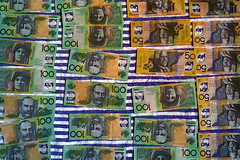
Money Laundering :: 2 of 2Image by Lachlan via Flickr

Bloomberg -- Just before sunset on April 10, 2006, a DC-9 jet landed at the international airport in the port city of Ciudad del Carmen, 500 miles east of Mexico City. As soldiers on the ground approached the plane, the crew tried to shoo them away, saying there was a dangerous oil leak. So the troops grew suspicious and searched the jet.

They found 128 black suitcases, packed with 5.7 tons of cocaine, valued at $100 million. The stash was supposed to have been delivered from Caracas to drug traffickers in Toluca, near Mexico City, Mexican prosecutors later found. Law enforcement officials also discovered something else.

The smugglers had bought the DC-9 with laundered funds they transferred through two of the biggest banks in the U.S.: Wachovia Corp. and Bank of America Corp., Bloomberg Markets magazine reports in its August 2010 issue.

This was no isolated incident. Wachovia, it turns out, had made a habit of helping move money for Mexican drug smugglers. Wells Fargo & Co., which bought Wachovia in 2008, has admitted in court that its unit failed to monitor and report suspected money laundering by narcotics traffickers -- including the cash used to buy four planes that shipped a total of 22 tons of cocaine.

The admission came in an agreement that Charlotte, North Carolina-based Wachovia struck with federal prosecutors in March, and it sheds light on the largely undocumented role of U.S. banks in contributing to the violent drug trade that has convulsed Mexico for the past four years.

‘Blatant Disregard’

Wachovia admitted it didn’t do enough to spot illicit funds in handling $378.4 billion for Mexican-currency-exchange houses from 2004 to 2007. That’s the largest violation of the Bank Secrecy Act, an anti-money-laundering law, in U.S. history -- a sum equal to one-third of Mexico’s current gross domestic product.

“Wachovia’s blatant disregard for our banking laws gave international cocaine cartels a virtual carte blanche to finance their operations,” says Jeffrey Sloman, the federal prosecutor who handled the case.

Since 2006, more than 22,000 people have been killed in drug-related battles that have raged mostly along the 2,000-mile (3,200-kilometer) border that Mexico shares with the U.S. In the Mexican city of Ciudad Juarez, just across the border from El Paso, Texas, 700 people had been murdered this year as of mid- June. Six Juarez police officers were slaughtered by automatic weapons fire in a midday ambush in April. More...

Friday, March 19, 2010

Wachovia laundered $420 billion in drug money

Wells Fargo's corporate headquarters in San Fr...Image via Wikipedia

Wachovia to Pay $160 Million to End Money Laundering Probe

Bloomberg
Wells Fargo & Co.’s Wachovia Bank agreed to pay $160 million to resolve a criminal investigation of how drug cartels used the bank to launder money through Mexican exchange houses.

The government agreed to defer prosecution on a criminal charge that Wachovia, once the fourth-largest U.S. bank, failed to set up an effective anti-money laundering program from 2003 to 2008. Wachovia admitted failing to monitor $420 billion in transactions through exchange houses, known as casas de cambio.

Wachovia admitted “serious and systemic” violations of the Bank Secrecy Act that let drug cartels launder at least $110 million through exchange houses. Drug dealers used Wachovia accounts to buy airplanes, and U.S. authorities seized “at least four” of those aircraft with more than 20,000 kilograms in cocaine, Wachovia admitted in U.S. District Court in Miami.

“Wachovia’s blatant disregard for our banking laws gave international cocaine cartels a virtual carte blanche to finance their operations while laundering at least $110 million in drug proceeds,” Jeffrey Sloman, U.S. attorney for the Southern District of Florida, said yesterday at a Miami news conference.

The violations were the largest ever of the Bank Secrecy Act, which is designed to curb money laundering, authorities said. Wells Fargo, based in San Francisco, bought Charlotte, North Carolina-based Wachovia Corp. at the end of 2008.

“This was a systemic breakdown at Wachovia which allowed approximately $420 billion to go unmonitored,” Sloman said.

Remedial Measure

Wells Fargo has cooperated in the investigation and must take remedial measures before the government will dismiss the criminal charge. The bank will forfeit $110 million and pay a $50 million fine. Prosecutors have “no evidence that Wells Fargo Bank’s anti-money laundering program is deficient,” prosecutors said in court papers.

“Wells Fargo learned about these matters before acquiring Wachovia and established reserves in prior periods that will fully cover the settlement amounts,” the bank said in a news release. Wachovia “exited all relationships with foreign money exchange houses” by early 2008, it said.

The casas de cambio, which are not banks, allow people and businesses in Mexico to exchange or wire transfer the value of currency to bank accounts in the U.S. and other countries, according to Wachovia’s 12-page factual statement entered with the deferred-prosecution agreement.

Bank’s Admission

“The nature of the CDC business allows money launderers the opportunity to move drug dollars that are in Mexico into CDCs and ultimately into the U.S. banking system,” Wachovia admitted. “Once the drug dollars were placed into CDCs, they were readily wire transferred into bank accounts of CDCs at Wachovia.”

Wachovia admitted offering correspondent banking services to 22 CDCs through three methods: wire-transferring money on behalf of third-party customers; accepting bulk cash transfers made by armored cars and other methods; and accepting checks and traveler’s checks put in pouches or digitally scanned through “remote deposit capture.”

From May 2004 to May 2007, Wachovia processed at least $373 billion in wire transfers on behalf of CDCs, the bank admitted. It processed $4.7 billion in bulk cash and $47 billion in RDC deposits for all correspondent banking customers, including Mexican CDCs, Wachovia admitted.

Wachovia didn’t admit that it knew the $420 billion it failed to monitor were drug proceeds.

Open Door

“When the bank failed to have effective anti-money laundering procedures in place, it allowed these traffickers to use the bank to their will,” said Mark Trouville, special agent in charge of the Drug Enforcement Administration’s office in Miami.

Trouville said Mexican and Colombian drug dealers used the bank to buy planes that moved drugs from South America.

Asked if Wachovia knew it was drug money, Trouville said, “I don’t think I can comment on whether Wachovia knew it was drug money. There were no effective procedures in place to be able to tell them that.”

The investigation began in 2005 when a drug-sniffing dog detected narcotics on a plane at a municipal airport in the Miami area, Sloman said. Investigators then traced the money to buy the plane to a Mexican exchange house, the prosecutor said.

Parts of the drug and money-laundering probe have become public, and some are still going on, Trouville said.

The case is USA v. Wachovia Bank, 10-cr-20165, U.S. District Court, Southern District of Florida (Miami).

Reblog this post [with Zemanta]