A recent study done by Harvard Law School’s Food Law and Policy Clinic and the Natural Resource’s Defense Council exposes the truth behind expiration dates and offers suggestions to food manufacturers on how to better set these dates.
“The dates are undefined in law and have nothing to do with safety,” said Emily Broad Leib, lead author of the study, titled The Dating Game, and director of Harvard Law School’s Food Law and Policy Clinic. “They are just a manufacturer suggestion of peak quality.”
Leib researched how manufacturers set the dates on their food products, discovering that some manufacturers conduct taste tests that will factor into the expiration date.
“[Manufacturers are] picking dates that are really protective over their brand, which is fine,” Leib said. “It’s just important for consumers to know that.”
The study looked at rates of waste, finding that 90% of consumers throw they food away on the sell by date. Leib said consumers are unaware that these dates are not necessarily linked with food safety. As a result, about 160 billion tons of food are wasted every year. Read more >>
Showing posts with label Natural Resources Defense Council. Show all posts
Friday, September 20, 2013
Friday, May 3, 2013
FDA may ban antibacterial soaps
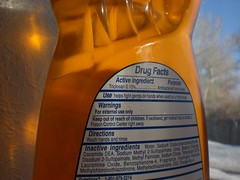
But federal health regulators are just now deciding whether triclosan - the germ-killing ingredient found in an estimated 75 percent of antibacterial liquid soaps and body washes sold in the U.S. - is ineffective, or worse, harmful.
The U.S. Food and Drug Administration is planning to deliver a review this year of whether triclosan is safe. The ruling, which will determine whether triclosan continues to be used in household cleaners, could have implications for a $1 billion industry that includes hundreds of antibacterial products from toothpaste to toys.
The agency's review comes amid growing pressure from lawmakers, consumer advocates and others who are concerned about the safety of triclosan. Recent studies of triclosan in animals have led scientists to worry that it could increase the risk of infertility, early puberty and other hormone-related problems in humans. Read more >>
Subscribe to:
Posts (Atom)