Showing posts with label Boston. Show all posts

Wednesday, July 31, 2013

Artificial human ear grown in lab

Ear
US scientists say they have moved a step closer to being able to grow a complete human ear from a patient's cells. In a new development in tissue engineering, they have grown a human-like ear from animal tissue.

The ear has the flexibility of a real ear, say researchers at Massachusetts General Hospital in Boston. The technique may one day be used to help people with missing or deformed outer ears, they believe.

Tissue engineering is a growing field in medical science, where substitute organs are made in the laboratory in the hope of using them to replace damaged ones. Read more >>
Enhanced by Zemanta

Wednesday, July 24, 2013

Key to climbing out of poverty: Location

And now there is new research, published this week, showing that when it comes to the chances that a poor child born in America can climb up from the lowest rungs on the economic ladder, where that child lives may be more telling than previously thought. The researchers started by looking narrowly at questions of tax policy for poor parents, when they discovered something surprising but unmistakable in their data.

“Location matters, place matters,” says Nathaniel  Hendren, a Harvard professor and one of the authors of the study. When it comes to a low-income child having a chance to climb up the economic ladder, “it matters where you grow up.”

That climb, the study shows, happens most commonly in the Northeast and the West, along with parts of the upper Midwest and much of Texas. New York, Boston, Seattle, Salt Lake City and Houston give a poor child a decent fighting chance. (In the map below, lighter colors indicate higher mobility; darker colors indicate lower mobility).

The odds of children from poor families moving into the middle class are significantly lower in the Southeast and industrial Midwest. Atlanta, Charlotte, Memphis, Raleigh, Indianapolis, and Columbus are some of the metropolitan areas where upward mobility seems to be seriously limited. Read more >>
Enhanced by Zemanta

Friday, June 14, 2013

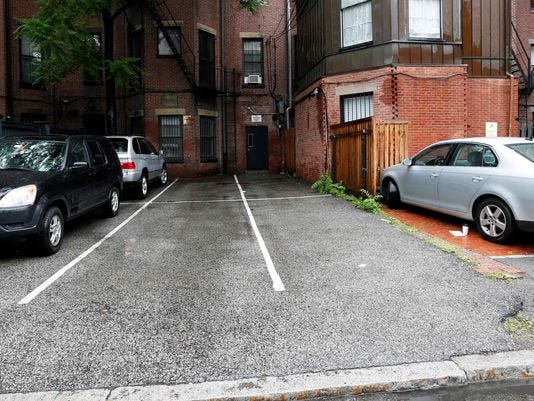
Boston woman pays $560K for 2 parking spots

(Photo: Michael Dwyer AP)
Parking is such a precious commodity in Boston that one woman was willing to pay $560,000 for two off-street spaces near her home.

Lisa Blumenthal won the spots in the city's Back Bay neighborhood during an on-site auction Thursday held in a steady rain by the Internal Revenue Service. The IRS had seized the spots from a man who owed back taxes.

Blumenthal, who lives in a multimillion-dollar home near the parking spaces, tells The Boston Globe she didn't expect the bidding to go quite so high for the spots she says will come in handy for guests and workers. Read more >>
Enhanced by Zemanta

Friday, May 10, 2013

Boston’s Top Cop Warns Against “Police State”

Boston Police - Special Operations Officer on ...
Boston Police Commissioner Edward Davis warned against creating a “police state” in the aftermath of the marathon bombings during testimony in front of a congressional hearing today.

“We do not, and cannot, live in a protective enclosure because of the actions of extremists who seek to disrupt our way of life,” Davis told lawmakers, adding “I do not endorse actions that move Boston and our nation into a police state mentality, with surveillance cameras attached to every light pole in the city.”

The hearing is designed to examine circumstances leading up to the bombings and find ways of decreasing the likelihood of similar attacks in future.

Despite Davis’ call for the public’s privacy to be protected, he did call for more surveillance cameras as well as more undercover officers to increase security around big events.
In the aftermath of the Boston bombings, numerous political figures and talking heads seized upon the attacks to call for big brother measures. Read more >>
Enhanced by Zemanta

Thursday, May 24, 2012

Half of Detroit’s Streetlights May Go Out

English: Dinalupihan, Bataan during blackout o...
Detroit, whose 139 square miles contain 60 percent fewer residents than in 1950, will try to nudge them into a smaller living space by eliminating nearly half its streetlights.

As it is, 40 percent of the 88,000 streetlights are broken and the city, whose finances are to be overseen by an appointed board, can’t afford to fix them. Mayor Dave Bing’s plan would create an authority to borrow $160 million to upgrade and reduce the number of streetlights to 46,000. Maintenance would be contracted out, saving the city $10 million a year. 

Other U.S. cities have gone partially dark to save money, among them Colorado Springs; Santa Rosa, California; and Rockford, Illinois. Detroit’s plan goes further: It would leave sparsely populated swaths unlit in a community of 713,000 that covers more area than Boston, Buffalo and San Francisco combined. Vacant property and parks account for 37 square miles (96 square kilometers), according to city planners. Detroit’s dwindling income and property-tax revenue have required residents to endure unreliable buses and strained police services throughout the city. More...

Monday, April 30, 2012

Chomsky on The Occupy Movement

Noam Chomsky
Noam Chomsky has not just been watching the Occupy movement. A veteran of the civil rights, anti-war, and anti-intervention movements of the 1960s through the 1980s, he’s given lectures at Occupy Boston and talked with occupiers across the US.

A new publication from the Occupied Media Pamphlet Series brings together several of those lectures, a speech on “occupying foreign policy” and a brief tribute to his friend and co-agitator Howard Zinn.

From his speeches, and in this conversation, it’s clear that the emeritus MIT professor and author is as impressed by the spontaneous, cooperative communities some Occupy encampments created, as he is by the movement’s political impact. CounterPunch spoke with Chomsky at his office. More...

Saturday, July 11, 2009

Foreclosed on Families Live in Hotels

According to a joint report by four of the largest U.S. homeless advocacy groups, almost 80 percent of homeless service providers report foreclosures have rendered many families homeless in cities across the nation, and because homeless shelters are at full capacity, families are forced to live in hotels, paid for by vouchers from states and non profits. Jason Szep with Reuters reports that in Massachusetts, homeless shelters are at capacity. State law requires temporary accommodation for those without shelter, leading authorities to place 830 families, including 1,125 children, in 39 motels -- an unprecedented number.

"This truly is the highest we have ever seen it," said Nancy Paladino, director of the family team for the Boston Health Care for the Homeless. "The hotel owners will tell you it has increased. The homeless service providers and the school officials will say we know there are more people living in hotels and putting their kids in school because that is the address they are giving us."

In Phoenix, writes Szep, demand for emergency accommodation is swamping available services as the recession and spiraling foreclosures turn even more families out of their homes. One nonprofit bought two former hotels -- a Days Inn and a Super 8 -- in a gritty downtown neighborhood to provide emergency accommodation for homeless and low income families. When the $23 million project is finished in September, it will be able to house 156 families, up from 112 now.

"We've seen a whole new subset of homeless families due to job loss and foreclosures, and our waiting list has doubled in the past year," said Nichole Barnes, chief fund development officer of the UMOM New Day Centers. "Some were previous homeowners. Due to the housing market out here, they'd got into a mortgage with a flexible interest rate. Some were working full time, but lost their jobs, went through their savings trying to save their home, and then found themselves without a home due to foreclosure," she said.