Showing posts with label Tokyo. Show all posts

Wednesday, July 10, 2013

Former Fukushima nuclear plant boss dies of cancer

English: Devastation in Minamisōma, Fukushima ...
The former boss of the Fukushima nuclear plant, who stayed at his post to try to tame reactors after Japan's earthquake and tsunami in 2011, has died of throat cancer.

Masao Yoshida, 58, was at the Japanese power station on March 11, 2011, when towering waves swamped cooling systems and sparked meltdowns that released plumes of radiation.

Yoshida led the subsequent effort to get the crippled complex under control, as workers battled frequent aftershocks to try to prevent the disaster worsening.

Government contingency plans revealed after the event showed how scientists feared a chain reaction if Fukushima spiralled out of control, a scenario that could have seen other nuclear plants engulfed and would have meant evacuating Tokyo. Read more >>
Enhanced by Zemanta

Thursday, April 4, 2013

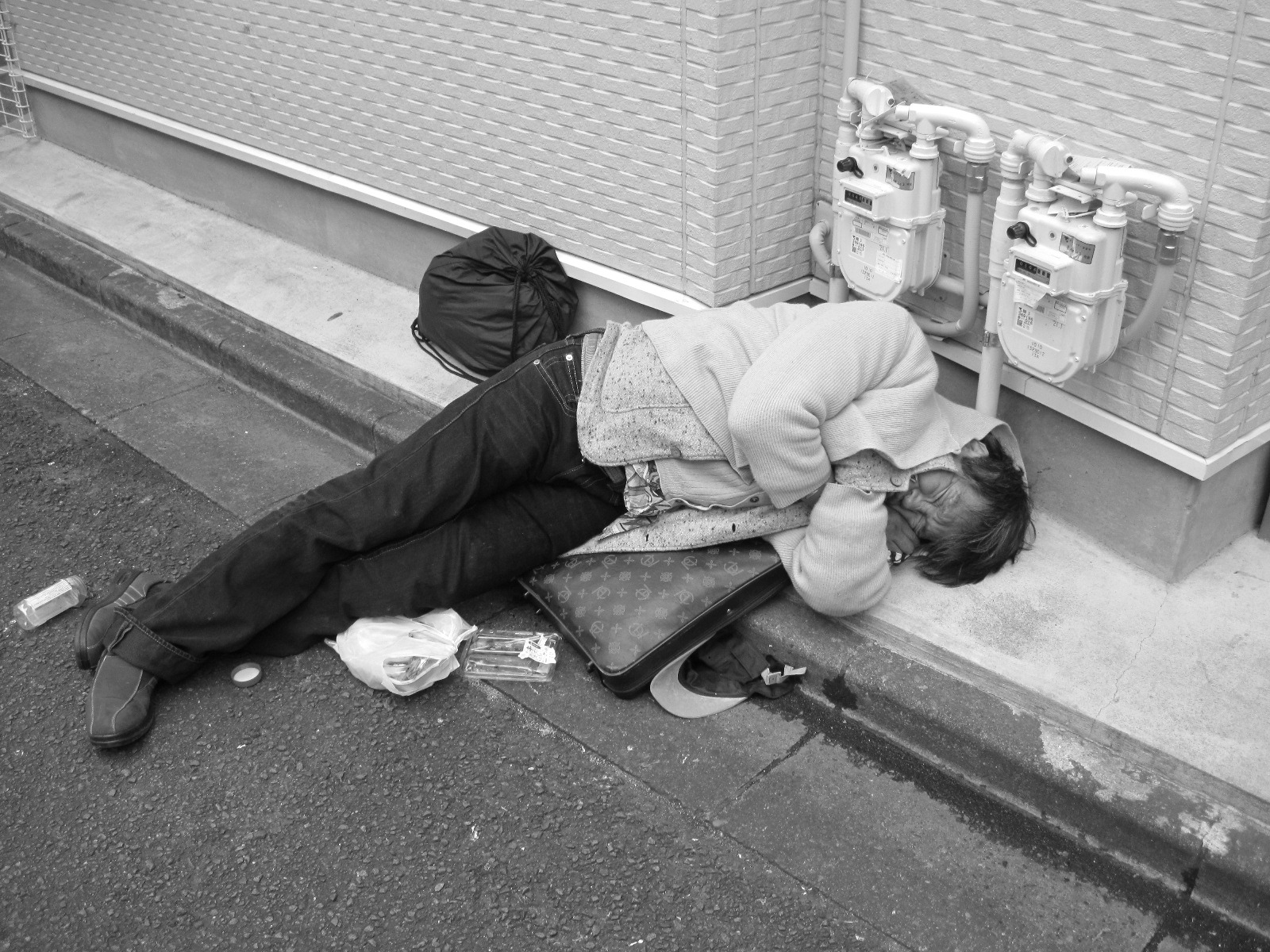
Scenes from Tokyo's Skid Row

You’ve probably never heard of Sanya. The Tokyo City Government doesn’t acknowledge its existence, and you won’t find it on any official maps. Sanya is more or less Tokyo’s skid row, where people, mostly men, end up when the other parts of this immense, gleaming city have stopped offering comfort and opportunity.

Sanya is where  the Japanese outcasts, food animal butchers, leather tanners, and other professions considered “unclean” by Japan’s traditionally Buddhist ruling class, aka the burakumin, or dowa, plied their trades for centuries. These tradesmen may mostly be gone, and the smell of the blood they spilled long-since drifted away, but the stigma of what Sanya once was remains, and it clings to the many of the people who live and work here. Read more >>

Monday, February 11, 2013

World's most expensive cities

1. Tokyo, Japan

Despite a weakening yen and the accompanying drop in the relative cost of living, Tokyo once again earns the distinction as the world's most expensive city. The Japanese city has held the spot for 14 of the last 20 years, said survey author Jon Copestake.

Loaf of bread: $9.06

Liter of milk: $2.93

Bottle of table wine: $15.95

High-end 3-course dinner for four, with wine: $1,266.30

2. Osaka, Japan

Asian cities like Osaka have seen their cost of living climb in recent years, so much that they now represent 11 of the world's 20 most expensive cities, and three of the top ten. A decade ago Asian cities accounted for just six of the top 20.

Loaf of bread: $7.94

Bottle of table wine: $17.55

Liter of unleaded gas: $1.96

High-end 3-course dinner for four, with wine: $915.32

3. Sydney, Australia

Australian cities like Sydney were once relatively affordable locales. But in recent years they've been moving up the ranks of the world's most expensive cities as a strong local currency has pushed up prices.

Loaf of bread: $5.03

Bottle of table wine: $25.38

Pack of brand-name cigarettes: $15.48

High-end 3-course dinner for four, with wine: $731.96

4. Oslo, Norway

Oslo, which is Norway's capital and its most populous city, is the most expensive city in Europe, according to the index.

Loaf of bread: $6.31

Pack of brand-name cigarettes: $15.24

Liter of milk: $2.58

High-end 3-course dinner for four, with wine: $813.36

5. Melbourne, Australia

Like Sydney, Melbourne has seen its cost of living jump significantly in the past decade due to the strengthening Australian currency.

Loaf of bread: $4.87

Bottle of table wine: $25.03

Liter of milk: $2.00

High-end 3-course dinner for four, with wine: 794.85

Read more >>
Enhanced by Zemanta

Monday, October 22, 2012

Japan Exports Tumble 10%


Japan’s exports fell the most since the aftermath of last year’s earthquake as a global slowdown, the yen’s strength and a dispute with China increase the odds of a contraction in the world’s third-largest economy.

Shipments slid 10.3 percent in September from a year earlier, leaving a trade deficit of 558.6 billion yen ($7 billion), the Finance Ministry said in Tokyo today. The median forecast in a Bloomberg News survey of analysts was for a 9.9 percent export decline. Imports rose 4.1 percent.

Economy Minister Seiji Maehara pressed the Bank of Japan for more action yesterday, saying the nation is “falling behind” in monetary stimulus and is at risk of another credit- rating downgrade. The BOJ today cut its view of eight out of nine regional economies while Taiwanese unemployment rose to a one-year high, underscoring weakness across Asia after China’s third-quarter growth was the slowest since 2009. Read more >>

Enhanced by Zemanta

Thursday, October 11, 2012

Japan Machinery Orders Slide 3.3%


Japan’s machinery orders fell more than expected in August, a sign that companies will cut back spending as global demand slows. Orders, an indicator of capital spending in three to six months, declined 3.3 percent after rising 4.6 percent in July, the Cabinet Office said today in Tokyo. The median of 26 estimates in a Bloomberg News survey was for a 2.3 percent drop.

Today’s data follow government reports last month showing declines in industrial output and exports, underscoring the risk of a contraction in gross domestic product. In an interview in Tokyo, Japanese Prime Minister Yoshihiko Noda yesterday called for talks to contain economic damage from a dispute with China over East China Sea islands.

“There’s a growing number of people who are pessimistic about the economic outlook,” Jun Kawakami, an economist at Mizuho Securities Co. in Tokyo, said before the report. “It’s really hard to see any signs that companies will increase capital spending.” Read more >>

Enhanced by Zemanta

Tuesday, June 26, 2012

Radioactive “Dirt” Hits Tokyo

Fukushima *
Fukushima has been decimated by radiation. But Fukushima City has less than 300,000 residents. And all of Fukushima prefecture has 2 million.  On the other hand, greater Tokyo – the world’s largest megacity – has 35 million inhabitants.

Tokyo soil has been blanketed by Fukushima radiation, even though the Japanese capital is 170 miles from the Fukushima nuclear complex. Indeed, officials just found “high levels” of radiation at 13 of 14 areas tested in a Tokyo public park.

Now, substances with even higher levels of radiation are showing up around Tokyo. Minamisoma city council member Koichi Oyama writes: People in Tokyo, the black substance is here! Read more >>

Friday, May 18, 2012

Longest Loss Streak For Japan Stocks Since 2001

A Shinkansen awaiting passengers in Tokyo. Fra...
Japanese stocks fell, with the Topix Index capping the longest streak of weekly losses since the Sept. 11 attacks in 2001, as exporters declined after U.S. economic data missed estimates and a rating cut of Spanish banks fueled concern Europe’s debt crisis is deepening.

Sony, Japan’s No. 1 exporter of consumer electronics that depends on Europe and the U.S. for 38 percent of its sales, fell 5.3 percent. Hitachi Construction Machinery Co. led machinery makers lower after industry bellwether Caterpillar Inc. said its sales growth slowed. Mizuho Financial Group Inc., Japan’s third-largest bank by market value, paced losses among lenders, dropping 3.4 percent after Moody’s Investors Service downgraded 16 Spanish banks.

The Topix index fell 2.9 percent to 725.54 as of the 3 p.m. trading close in Tokyo, capping its biggest daily loss since Aug. 5. The measure fell 4.3 percent this week, its seventh week of decline. It has dropped for seven straight weeks only twice since November 1977 -- in 2001 and 1995. About eight stocks fell for each that rose. More...

Thursday, May 17, 2012

Forty Million Japanese in Danger of Radiation Poisoning

ATR core, powered up. The serpentine arrangeme...
Natural News
Japanese officials are currently engaging in talks with Russian diplomats about where tens of millions of Japanese refugees might relocate in the very-likely event that the Fukushima Daiichi nuclear facility's Reactor 4 completely collapses. According to a recent report by EUTimes.net, Japanese authorities have indicated that as many as 40 million Japanese people are in "extreme danger" of radiation poisoning, and many eastern cities, including Tokyo, may have to be evacuated in the next few weeks or months to avoid extreme radiation poisoning.

As we continue to report, the situation at Fukushima is dire, to say the least. Reactor 4 is on the verge of complete collapse, which would send radioactive nuclear fuel from thousands of fuel rods directly into the atmosphere. These fuel rods, after all, are already exposed to the open air, but the full release of their fuel would cause not only a regional catastrophe, but also a global nuclear holocaust.

"A report released in February by the Independent Investigation Commission on the Fukushima Daiichi Nuclear Accident stated that the storage pool of the plant's No. 4 reactor has clearly been shown to be 'the weakest link' in the parallel, chain-reaction crises of the nuclear disaster," reported the Mainichi Daily News recently.

"The worst-case scenario drawn up by the government includes not only the collapse of the No. 4 reactor pool, but the disintegration of spent fuel rods from all the plant's other reactors. If this were to happen, residents in the Tokyo metropolitan area would be forced to evacuate." More...

Tuesday, July 26, 2011

Japan’s Food-Chain Threat Multiplies as Fukushima Radiation Spreads

Fukushima *Image by Sterneck via FlickrRadiation fallout from the wrecked Fukushima nuclear plant poses a growing threat to Japan’s food chain as unsafe levels of cesium found in beef on supermarket shelves were also detected in more vegetables and the ocean.

More than 2,600 cattle have been contaminated, Kyodo News reported July 23, after the Miyagi local government said 1,183 cattle at 58 farms were fed hay containing radioactive cesium before being shipped to meat markets.

Agriculture Minister Michihiko Kano has said officials didn’t foresee that farmers might ship contaminated hay to cattle ranchers. That highlights the government’s inability to think ahead and to act, said Mariko Sano, secretary general for Shufuren, a housewives organization in Tokyo.

“The government is so slow to move,” Sano said. “They’ve done little to ensure food safety.”

Aeon Co., Japan’s biggest supermarket chain, said today 4,108 kilograms (9,056 pounds) of beef suspected of being contaminated was inadvertantly put on sale at 174 stores across Japan. Supermarkets started testing beef after the Tokyo Metropolitan Government found radioactive cesium in slaughtered cattle this month. More...
Enhanced by Zemanta

Friday, April 15, 2011

Japan to experience long term drop in tourism and product ownership

Japan Kanto RegionImage via WikipediaJack Barnes
In the future, Japanese products will have to undergo extreme levels of product safety inspections. The radiation is not biased in what it infects. That is, it could be from a sub assembly part shipped out of the area, or it could be from airborne fallout contaminating a shipping container for example.

The reality is that Japan is going to experience both a long term drop in tourism, but also a long term drop in the public ownership of Japanese produced products. There will be a long term stigma to the events of March 11th, which have not been baked into the global supply chain yet. Customer choices is one that has not been touched on yet, but lets be honest. Do you want to buy a car that has a real chance of residual radiation? Even if it was only a 1-5% chance?

Over the medium term, I expect to see Japan export its business with employees, to seismically safe locations. The need for major rolling black outs this summer is going to hit home to the businesses that need a stable supply of electricity.

When you consider the true level of importance of the Kanto region on the Japanese economy, the implications sink in. The impact to the nation is going to be larger than most expected. The Kanto region was still an important bread basket for Japan. In a nutshell, 1 out of 3 Japanese lived in this area. More...
Enhanced by Zemanta

Wednesday, March 30, 2011

Toxic plutonium seeping from Japan's nuclear plant

Spent fuel pool at a nuclear power plant. http...Image via WikipediaHighly toxic plutonium is seeping from the damaged nuclear power plant in Japan's tsunami disaster zone into the soil outside, officials said Tuesday, as the government grew frustrated by missteps in the effort to stabilize the overheated facility.

Safety officials said the small amounts of plutonium found at several spots outside the complex were not a risk to humans but support suspicions that dangerously radioactive water is leaking from damaged nuclear fuel rods -- a worrying development in the race to bring the power plant under control.
"The situation is very grave," Chief Cabinet Secretary Yukio Edano told reporters Tuesday. "We are doing our utmost efforts to contain the damage."

A tsunami spawned by a magnitude-9.0 earthquake March 11 destroyed the power systems needed to cool the nuclear fuel rods at the Fukushima Dai-ichi complex, 140 miles (220 kilometers) northeast of Tokyo.
Since then, three of the plant's six reactors are believed to have partially melted down, and emergency crews have grappled with everything from malfunctioning pumps to dangerous spikes in radiation that have sent workers fleeing.

Radiation seeping from the plant has made its way into produce, raw milk and even tap water as far away as Tokyo, prompting some nations to halt imports from the region. Residents within a 12-mile (20-kilometer) radius of the plant have been urged to leave or stay indoors. More...
Enhanced by Zemanta

Friday, March 25, 2011

One need travel no further for answers after reading this intelligent summary of Japan's Nuclear Crises


Before we discuss "the markets" or whatever you want to call them now, let's briefly look at the situation in Japan, which has "officially" deteriorated. The breaking news over night that a "breach" in a reactor "may have occurred" and that the situation is now "very grave and serious" should be no surprise to keen investors watching world news events. For even laymen know that when radiation is detected thousands of miles away in Iceland, when radiation in drinking water 150 miles away is detected, when high levels of radiation in sea water miles away are discovered, when radiation levels 25 miles away from the epicenter in the air are so high one could get sick in hours if not minutes, when radiation is detected in milk and food and made unsafe -- we know at least one of those 6 reactors is leaking. Which is why it is particularly interesting the officials are just now saying "evacuations are encouraged" between the 12-19 mile "safe to stay indoors" zone when the US and all other nations had set the minimum limit at 50 miles. I wonder if money has anything to do with that?

Now that it's been admitted officially that the rods are exposed and likely have been since the March 14th explosions, we can now accept that this is beyond the Chernobyl accident. Of course, this has been known since almost 10 days ago that
"Uncovered Nuclear Fuel Rods In Japan Could Ignite A Chernobyl-Like Disaster" as the title of this article dated the 16th of March states. Also 10 days ago, Japanese officials talked about a "lag time" of information as to the reason why the entire world was saying the disaster was much worse than they were admitting to. It seems the "lag time" they were talking about applied to them. Who's kidding who?

Of course, they can always raise the "healthy" limit of radiation exposure... oh, scratch that - they already did. This leads nicely into two other topics: 1) Is this event a foretaste of the way other gov'ts handle these types of situations, which have a very high probability of occurring and 2) if the markets even care anymore about any bad news, here, here, here, here, here and here just to start. Notice too, the timing of an "upward revised" GDP could not have come at a better time (I say show me the money!).

All that matters is the endless flow of money being pumped into the markets to keep them up. Do you have your rally hats on? A quick look at the markets shows green everywhere with a 100 point rally today. Remember the mantra - bad news is good news for the stock markets in this upside down world. At least the wealthy will be saved, as they dole out $20 million for their underground bunkers which have seen sales rise 1000% since January.

As reported here yesterday, Portugal needs $100 Billion in funding and fast. Not only did the entire gov't disintegrate, Portugal has run out of money; not to mention the ECB is looking at even more funding for Greece as well. Soon, Spain will follow. Then comes Ireland looking to get more or simply leave the EU entirely. If a major earthquake struck at the heart of Europe, perhaps the markets would have yet another reason to rally. Absurd, or is it? Take a look at the M1 money supply being pumped into the economy. 

Thus, we will continue to see more inflation around the world in the things we need and use everyday, and deflation in things we want to keep as an investment such as housing. But who wants to hear about fundamentals? All that matters is the Fed's unofficial mandate to pump up the markets at any "cost" until the DOW reaches 54,000. Therefore, I leave you with the most important topic that means anything right now and for many months ahead - Japan.

Enhanced by Zemanta

Monday, March 14, 2011

Washington Post article that cuts thru all of Japan's Nuclear LIES

In thermal nuclear reactors (LWRs in specific)...Image via WikipediaJapanese plant races to contain meltdowns after two blasts; third reactor loses cooling capacity

Chico Harlan and Steven Mufson, Monday, March 14

TOKYO — A second explosion rocked Japan’s seaside Fukushima Daiichi nuclear complex Monday, this time destroying an outer building at unit 3. A Japanese government official separately said that a third reactor at the six-reactor facility had lost its cooling capacity, adding to the complications facing the engineers who try to limit the damage of a partial meltdown.

Like the Saturday explosion at unit 1, the blast at unit 3 took place after a buildup of hydrogen was vented by the reactor. The hydrogen was produced by the exposure of the reactor’s fuel rods and their zirconium alloy casing to hot steam.

In normal conditions, the fuel rods would be covered and cooled by water.

The explosion occurred as Tokyo Electric entered day four of its battle against a cascade of failures at its two Fukushima nuclear complexes, using fire pumps to inject tens of thousands of gallons of seawater into two reactors to contain partial meltdowns of ultra-hot fuel rods.

The tactic produced high pressures and vapors that the company vented into its containment structures and then into the air, raising concerns about radioactivity levels in the surrounding area where people have already been evacuated. The utility said that at one of the huge, complicated reactors, a safety relief valve was opened manually to lower the pressure levels in a containment vessel.

But the limited vapor emissions were seen as far less dire than the consequences of failure in the fight against a more far-reaching partial or complete meltdown that would occur if the rods blazed their way through the reactor’s layers of steel and concrete walls.

At the 40-year-old Fukushima Daiichi unit 1, where an explosion Saturday destroyed a building housing the reactor, the spent fuel pool, in accordance with General Electric’s design, is placed above the reactor. Tokyo Electric said it was trying to figure out how to maintain water levels in the pools, indicating that the normal safety systems there had failed, too. Failure to keep adequate water levels in a pool would lead to a catastrophic fire, said nuclear experts, some of whom think that unit 1’s pool may now be outside.

“That would be like Chernobyl on steroids,” said Arnie Gundersen, a nuclear engineer at Fairewinds Associates and a member of the public oversight panel for the Vermont Yankee nuclear plant, which is identical to the Fukushima Daiichi unit 1. More...